
Soft market creates critical window to tackle widespread underinsurance, brokers warn

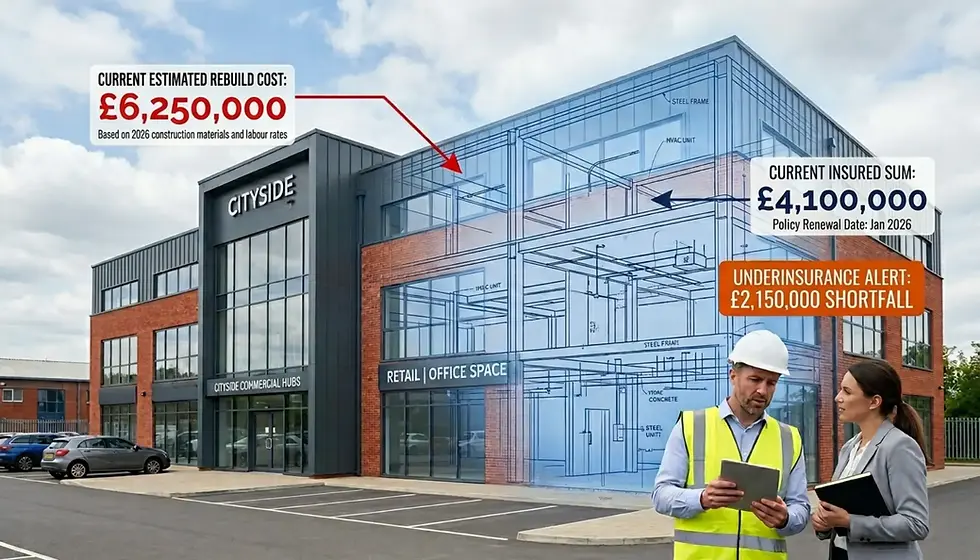
The UK’s soft insurance market is giving brokers a rare opportunity to address chronic underinsurance, as new industry insight shows the problem is increasingly leading to reduced or declined claims.
Research from Aviva’s 2026 Broker Barometer indicates that underinsurance is no longer a hidden issue but one now regularly affecting claims outcomes. Brokers report growing concern that clients are discovering gaps in cover only after a loss, prompting renewed focus on ensuring sums insured reflect true rebuild costs.
The findings reinforce longstanding data from RebuildCostASSESSMENT.com, which shows the scale of the issue across UK property. Analysis of more than 43,000 professional assessments found just 7% of buildings are insured accurately, with 70% underinsured and 23% overinsured. Among commercial properties, 71% are underinsured, highlighting a significant exposure for UK businesses.
Industry sentiment suggests this is not being driven primarily by cost pressures. Instead, lack of awareness, misunderstanding of rebuild values and confusion between market value and reinstatement cost are now seen as the main causes. Many policyholders continue to rely on annual renewals and index-linked increases, despite these often failing to keep pace with real-world rebuild inflation.
Jason Chambers, Director of Innovation, Commercial Lines at Aviva, said: “Underinsurance is no longer just an oversight — it’s becoming an embedded behaviour. Many customers review their cover every year, yet their sums insured continue to fall short of what’s needed.
“When that gap persists, underinsurance doesn’t just create financial pressure, it can turn a manageable setback into a far more challenging situation for a business and its people.”
Soft market opportunity
Brokers are increasingly recognising their role in addressing the issue, with many indicating they plan to use current market conditions to engage clients more proactively. The soft market, characterised by lower premiums and increased competition, is seen as creating space for more meaningful conversations around cover adequacy rather than price alone.
However, a disconnect remains between intent and action. While brokers acknowledge responsibility, regular discussions around sums insured are not yet standard practice, and only a minority of businesses commission professional reinstatement cost assessments on a consistent basis.
That lack of accurate valuation continues to drive both underinsurance and a growing trend of overinsurance, where businesses pay inflated premiums for cover that exceeds true rebuild cost.
Johnny Thomson, Head of Strategic Planning at RebuildCostASSESSMENT.com, said: “Our data shows that the vast majority of UK properties are insured for the wrong amount. While underinsurance remains the bigger risk, overinsurance is rising and creating unnecessary financial strain.
“Both issues come back to the same point — without accurate, up-to-date valuations, businesses and brokers are making decisions on incomplete information. The current market conditions provide a real opportunity to correct that.”
While there are early signs of improvement in underinsurance levels, progress remains gradual. Industry leaders argue that without consistent use of professional valuations, the gap between sums insured and actual rebuild costs will persist.
The message from across the market is clear: improving valuation accuracy is now central to risk management, and the current soft market may offer the best chance in years to address a problem that has quietly shaped claims outcomes for too long.


