
Claims crackdown highlights sums insured risk

A new FCA push on home insurance claims standards, triggered by a Which? super-complaint, is putting renewed pressure on insurers and brokers to prove that policies will perform at the moment of truth.
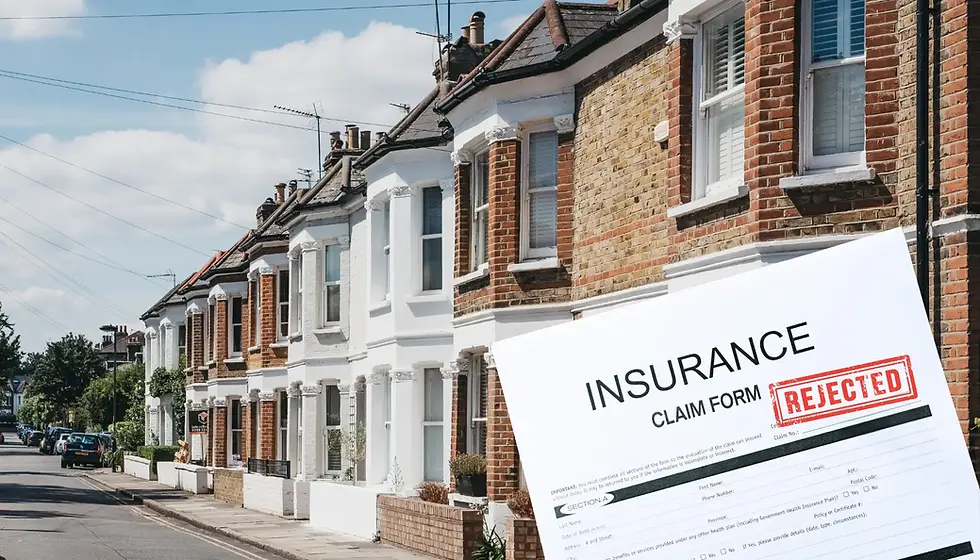
Which?’s super-complaint, submitted to the Financial Conduct Authority in September 2025, accused the home and travel insurance markets of failing consumers when claims are made, arguing that poor outcomes were being driven by weak oversight, unclear products and an enforcement response that had not gone far enough to stop repeated harm.
The FCA published its formal response on 18 December 2025, confirming it would expand its work in both markets and with a stronger emphasis on claims handling standards, transparency and action where poor practice is identified.
That expansion builds on work already underway. The FCA had already reviewed the claims handling arrangements of a number of home and travel insurers, reporting examples of good practice, but also clear weaknesses, including problems with operational oversight, complaint handling and the governance of outsourced claims operations.
Need to ‘do more’
In its December response, the regulator said that over the next year it will “do more” to improve claims outcomes by reviewing firms’ customer service and delivery, and examining how they manage third parties involved in claims handling. It also said it will analyse how products are sold, with the goal of improving consumer understanding of cover and setting expectations more clearly at the point of purchase.
FCA data also shows that while the number of property insurance complaints has remained broadly stable, the cost of resolving them is rising sharply. It has been reported that more than 93,000 property insurance complaints were opened in the first half of 2025, only marginally higher than in 2021, yet firms set aside over £43.6 million in provisions.
Claims acceptance rates in buildings insurance remain relatively low compared with other products. In 2024, acceptance stood at 63.2% for buildings policies and 71.9% for combined buildings and contents, well below the 90% plus acceptance rates seen elsewhere in the market.
Inaccurate sums insured
Yet beyond claims service and sales transparency sits a quieter driver of home claims friction - the buildings sum insured - and whether it still reflects the true cost of reinstatement.
“When the sums insured are wrong, everything that follows becomes harder,” said Matthew Ward, Senior Surveyor at RebuildCostASSESSMENT.com. “A claim should be about putting someone back where they were, but inaccuracy can turn it into an argument about definitions, limits and responsibility.”
RebuildCostASSESSMENT.com’s latest analysis, based on 43,000+ comprehensive property assessments, shows that only 7% of properties are insured accurately. 70% are underinsured and 23% are overinsured. Underinsured properties are insured for 67% of true rebuild cost on average, while overinsured properties are typically insured for around 129%.
“Which? has put the industry under a spotlight,” added Matthew. “The FCA has signalled stronger oversight and tougher action. For insurers, brokers and distributors, the call to action is clear - treat buildings sums insured as a professional risk control, not a form field, so the policy works as intended when the claim happens.”

